


Defining the Collaborative Code
At its core, open source software (OSS) represents a fundamental shift in how we think about creating and sharing technology. More than just code that is free to use, it is a development model and a philosophy rooted in transparency and community effort. The act of defining this concept goes beyond the technical; it involves a collaborative ethos where developers and users from around the world can inspect, modify, and enhance the source code. This open approach fosters rapid innovation, improved security, and a powerful sense of shared ownership.
The origins of this movement trace back to the early days of computing, when sharing software was a common academic practice. However, the term “open source” was formally coined in the late 1990s to provide a more pragmatic, business-friendly alternative to the ideologically-driven “free software” movement. This rebranding helped propel the adoption of open source software into the commercial world, demonstrating its value beyond hobbyist or academic circles.
So, how exactly does it work? The foundation of any open source project is its public accessibility. The human-readable source code is made available under specific licenses that grant others permissions to use, change, and distribute the software. These licenses are crucial; they provide the legal framework that protects both the creators and the users, ensuring the project remains open while defining the terms of its use and modification. From the Linux operating system to the Firefox web browser, this model has produced some of the most reliable and widely used technology in the world.
Comparison table
The Origins and Philosophy of the Movement
The origins of the open source software movement are deeply rooted in the free software philosophy of the 1980s, championed by figures like Richard Stallman. The initial focus was on user freedom: the freedom to run, copy, distribute, study, change, and improve the software. This was a direct response to the rise of proprietary software with restrictive licenses. The term “free” referred to liberty, not price, a distinction that sometimes caused confusion in business contexts.
In the late 1990s, a strategic shift occurred. Recognizing the need for a more pragmatic and business-friendly brand, a group of early advocates coined the term “open source.” This new terminology reframed the conversation, moving the emphasis from moral and ethical arguments about freedom to the practical benefits of a collaborative development model. The core idea was that when source code is open and accessible, a diverse community can contribute to it, resulting in more robust, secure, and rapidly evolving software. This pragmatic philosophy helped accelerate the adoption of open source software in corporate and commercial environments.
The entire movement is built upon a foundation of specific legal frameworks. The philosophy of how open source works is not merely a suggestion; it is legally defined and enforced through various licenses. These licenses grant permissions that are typically restricted by copyright law, ensuring the code remains open for others to use, modify, and share. Key tenets of the philosophy, codified in these licenses, include:
Open source software also affects how teams choose external development support. A company evaluating how to choose a software developer should look beyond price and check licensing awareness, contribution practices, security review, documentation quality, and long-term maintenance responsibility. Those factors are especially important when a project depends on third-party repositories or community-maintained components.
- Free Redistribution: Licenses do not restrict any party from selling or giving away the software.
- Source Code Access: The program must include source code, and must allow distribution in source code as well as compiled form.
- Derived Works: The license must allow for modifications and derived works, and must allow them to be distributed under the same terms as the original software’s license.
- Technology-Neutrality: No provision of the license may be predicated on any individual technology or style of interface.
Ultimately, the defining philosophy of the open source software movement is one of transparency, collaborative effort, and meritocracy, where the best ideas and code can rise to the top, regardless of their origins.
How Open Source Software Works: Licenses and Collaboration
While the origins and philosophy of the movement explain the “why,” the practical mechanics of how open source software works are rooted in two key components: legal frameworks and collaborative technology. It is not a free-for-all; rather, it is a highly structured ecosystem governed by specific rules that enable global cooperation. This structure ensures that the code remains accessible and that contributions are managed effectively, turning an abstract ideal into a functional development model.
The Role of Open Source Licenses
At the heart of the open source model are licenses. An open source license does not discard copyright; instead, it uses copyright law to grant specific permissions to anyone who receives the code. These licenses are the legal instruments that guarantee the rights to view, modify, and distribute the software’s source code. The Open Source Initiative (OSI) plays a crucial role in defining and approving licenses that meet the community’s standards for “openness.” These licenses generally fall into two broad categories:
- Permissive Licenses: Licenses like the MIT, Apache 2.0, and BSD licenses have minimal restrictions on how the software can be used. They allow users to take the code, modify it, and even incorporate it into proprietary, closed-source products without requiring them to release their own changes.
- Copyleft Licenses: Licenses such as the GNU General Public License (GPL) are often described as “reciprocal.” They require that any modified versions or derivative works of the software also be released under the same or a compatible open source license. This mechanism, known as “copyleft,” is designed to ensure that the code and all its future iterations remain free and open, preserving the collaborative spirit for all subsequent users of the open source software.
The Collaborative Engine
Legal permissions from licenses provide the foundation, but technology provides the workshop. Modern open source software development relies heavily on distributed version control systems (DVCS), with Git being the most dominant. Git allows a vast number of developers to work on the same codebase simultaneously without interfering with each other’s work. Each developer can have a complete copy of the project’s history, make changes independently, and then propose merging their contributions back into the main project.
This collaborative process is facilitated by web-based platforms like GitHub, GitLab, and Bitbucket. These services build upon Git, providing a central hub for hosting code, tracking issues, reviewing proposed changes (via “pull requests” or “merge requests”), and automating testing and deployment. This infrastructure makes it possible for a global community of volunteers and corporate-sponsored contributors to work together efficiently, building and maintaining complex software projects in a transparent and organized manner.
Key Advantages for Users and Developers
For End-Users
The most immediate advantage for users is often cost-effectiveness, as many powerful open source software applications are available free of charge. Beyond price, the core philosophy of the movement provides significant benefits. Transparency is paramount; because the source code is open for inspection, users are not locked into a single vendor’s ecosystem. This openness fosters trust and security, as a global community of developers can scrutinize the code for vulnerabilities, often leading to faster and more robust patches than proprietary alternatives. The collaborative nature of development also ensures longevity and stability, as projects can be maintained by the community even if the original creators move on.
For Developers and Organizations
For those who build and deploy technology, the advantages are both practical and strategic. Engaging with open source software provides unparalleled learning opportunities, allowing developers to study, modify, and contribute to high-quality, real-world code. This collaborative work builds a public portfolio and fosters valuable connections within the development community.
- Flexibility and Customization: Developers have the freedom to modify the software to meet specific needs, a level of control impossible with closed-source products. The variety of permissive and copyleft licenses ensures there are options for nearly any use case.
- Accelerated Development: Instead of building every component from scratch, developers can leverage existing open source libraries and frameworks. This allows teams to focus on creating unique value rather than reinventing foundational code.
- Superior Quality and Innovation: The peer-review process inherent in the open source model often leads to higher-quality, more secure, and more reliable code. When thousands of developers are testing and improving a piece of software, innovation happens at a rapid pace.
- Community Support: Active projects are supported by a vibrant community of users and developers through forums, mailing lists, and chat platforms. This collective knowledge base is an invaluable resource for troubleshooting and implementation.
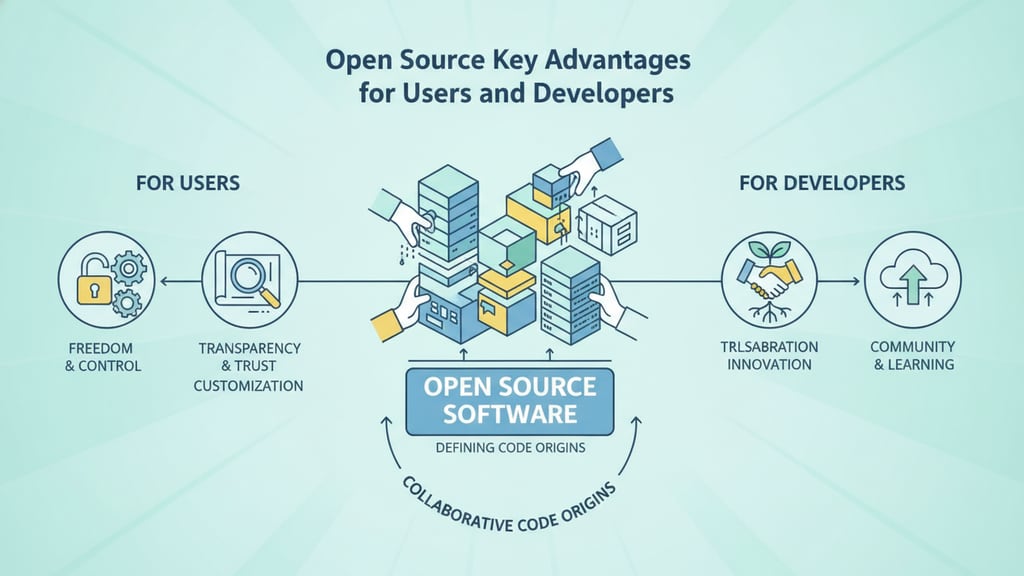
Infographic at a glance
Visual summary of the key points on this topic.





Navigating the Challenges and Potential Risks
Despite its many advantages, the world of open source software is not without potential pitfalls. The very philosophy that drives its success—a decentralized, collaborative approach to development—can also introduce unique challenges for individuals and organizations. Understanding these risks is crucial for making informed decisions and implementing effective mitigation strategies.
One of the most discussed topics is security. While the “many eyes” theory suggests that open code is more secure because anyone can inspect it for flaws, this openness can also be exploited. A vulnerability in a popular library can have a cascading effect across thousands of projects that depend on it. Furthermore, the diverse origins of contributions mean that not all code is written to the same security standards, and malicious contributions, though rare, are a possibility. Vetting dependencies and actively monitoring for security advisories is therefore essential.
The collaborative nature of open source development necessitates robust and scalable architectural patterns. To manage the complexity inherent in projects with hundreds or even thousands of contributors, maintainers often rely on established design methodologies that promote modularity and code reusability. One of the most prevalent paradigms in this domain is object-oriented programming (OOP). This approach allows developers to structure complex systems into manageable, self-contained objects that interact with one another through well-defined interfaces. This not only simplifies the development process but also makes the codebase easier to maintain, debug, and extend over time. For developers looking to contribute effectively to major open-source projects, a deep understanding of these foundational principles is essential. A practical understanding of object-oriented software principles also helps contributors work with modular project structures, interface boundaries, and long-term maintenance expectations.
Furthermore, the support structure for open source software often differs significantly from its commercial counterparts. While vibrant communities can provide excellent support, there is typically no guaranteed service level agreement (SLA) or dedicated helpdesk. Projects may be maintained by a small team of volunteers, and if they move on, the software can become abandoned or “unmaintained.” This creates a significant risk for businesses that rely on that software for critical operations, highlighting the importance of assessing a project’s health and community activity before adoption.
Navigating the legal complexities of licenses is another critical challenge. The open source movement has produced a wide array of licenses, each with different permissions and obligations. Some “permissive” licenses allow the code to be used with very few restrictions, while “copyleft” licenses require that derivative works also be made open source. Incompatibility between different licenses within a single project can create significant legal and compliance issues. A failure to understand and adhere to these terms can lead to intellectual property disputes, making a clear licensing policy and careful auditing indispensable when working with open source software.
The Business and Economics of Open Source
At first glance, the economic model behind open source software can seem counterintuitive: how can a product with freely accessible source code generate revenue? The answer lies in shifting the value proposition from the code itself to the services, support, and expertise surrounding it. Rather than selling a product license, businesses have developed sustainable models by commercializing the ecosystem that grows around a collaborative project. This approach leverages the core philosophy of the open source movement—transparency and community—as a strategic business asset.
Several dominant business models have emerged, demonstrating the financial viability of this approach:
- Professional Services and Support: This is the classic model, perfected by companies like Red Hat. They distribute a hardened, enterprise-ready version of open source software (like Linux) and sell subscriptions that include technical support, maintenance, security patches, and consulting services. Customers pay for reliability and expert assistance, not the software itself.
- Open Core: In this model, a company offers a core version of its product as free and open source, while selling proprietary add-ons, plugins, or a more feature-rich enterprise edition. Companies like GitLab and Elastic use this strategy, attracting a large user base with the free version and upselling advanced features to business clients.
- Hosted and Managed Solutions (SaaS): Many organizations provide popular open source software as a fully managed, cloud-based service. Automattic, for example, offers a simplified, hosted version of the open source WordPress software at WordPress.com. This model removes the burden of installation, configuration, and maintenance from the end-user, who pays for convenience and scalability.
- Donations and Sponsorships: For many foundational projects and non-profits like the Apache Software Foundation or the Linux Foundation, funding comes from corporate sponsorships and individual donations. Companies that rely on this software contribute financially to ensure its continued development and stability, viewing it as a critical investment in their own infrastructure.
The broader economic impact of open source software extends far beyond the companies that directly commercialize it. It dramatically lowers the barrier to entry for new startups, which can build on a foundation of powerful, free tools without massive upfront licensing costs. This fosters innovation and competition across the tech industry. Furthermore, major corporations like Google, Microsoft, and Amazon have become some of the largest contributors to open source projects. Their investment is strategic: it allows them to influence the direction of technologies critical to their operations, attract top engineering talent, and build goodwill within the developer community.
Current Trends Shaping the Ecosystem
The world of open source is not static; it is a vibrant, evolving ecosystem constantly being reshaped by technological advancements and shifting developer priorities. While its foundational philosophy and collaborative origins remain influential, several key trends are currently defining its future trajectory. These developments are changing how the movement operates, from the nature of the code being shared to the very structure of its governance and sustainability.
- The Intersection with Artificial Intelligence: The rise of AI and machine learning has introduced a new frontier. The debate now extends beyond source code to include models, weights, and training data. This trend challenges traditional open source licenses, prompting discussions about what it truly means for an AI system to be “open” and how collaborative development works in this new paradigm.
- A Heightened Focus on Supply Chain Security: High-profile vulnerabilities have placed a spotlight on the security of the open source software supply chain. This has led to a significant push for better security practices, including the adoption of Software Bill of Materials (SBOMs), automated security scanning, and signed attestations. The focus is shifting from merely writing collaborative code to ensuring its integrity from creation to deployment.
- Corporate Stewardship and Sustainability Models: Major technology companies are now the primary contributors to and maintainers of many critical projects. This shift from volunteer-led efforts to corporate stewardship is driving new models for funding and sustainability. Foundations and commercial entities are exploring ways to ensure the long-term health of the open source software that underpins the digital economy.
- The Dominance of Cloud-Native and Edge Computing: The principles of open source are at the heart of the cloud-native landscape, with projects like Kubernetes and Prometheus setting industry standards. This trend sees development shifting towards microservices, containers, and distributed systems, influencing the architecture and deployment of modern software and extending its reach to the network edge.
The Enduring Impact on Global Technology
From its niche origins as a counter-cultural movement, open source software has fundamentally and permanently altered the DNA of technological innovation. Its impact extends far beyond the simple act of sharing code; it has established a new paradigm for creation and problem-solving. The core philosophy of transparent, collaborative development is no longer a radical idea but a foundational principle for much of the digital world. This shift represents the movement’s most profound legacy: making “open” the default expectation for building the future.
The principles defining this approach have bled into nearly every corner of the technology sector, becoming the bedrock upon which modern infrastructure works. It is difficult to imagine the contemporary digital landscape without the contributions of the open source community. Key pillars of today’s technology stack are not just influenced by this model—they are built directly upon it.
- Cloud Computing and Infrastructure: The platforms that power the internet, from containerization technologies like Kubernetes to the operating systems running on vast server farms, are overwhelmingly based on open source software.
- Artificial Intelligence and Machine Learning: The rapid democratization of AI has been fueled by open frameworks like TensorFlow and PyTorch, allowing researchers and developers worldwide to build upon a shared foundation of cutting-edge tools.
- The Internet of Things (IoT): A vast ecosystem of connected devices relies on open standards and software to ensure interoperability and security, preventing vendor lock-in and fostering broader innovation.
Ultimately, the enduring impact is not just the software itself, but the normalization of its development model. The concepts of community governance, transparent processes, and flexible licenses have provided a powerful blueprint for progress. As we look ahead, the collaborative spirit that defines open source software will continue to be the primary engine driving solutions to the world’s most complex technological challenges, proving that shared knowledge is our most powerful tool for advancement.
Embracing a Future Built on Open Collaboration
From its ideological origins as a niche movement to its current status as a cornerstone of the digital world, the trajectory of open source software has been remarkable. It has evolved far beyond a simple method for developing code; it represents a fundamental shift in how we create, share, and innovate. The core philosophy, built on transparency and community-driven improvement, has proven to be a powerful engine for technological progress, demonstrating that a collaborative approach can often outperform closed, proprietary models.
The true power of this model lies not just in the specific licenses or the repositories where code is stored, but in the human network it fosters. This collaborative spirit is the essence of how open source software works and thrives. It is a testament to the idea that when diverse minds are free to inspect, modify, and distribute creative works, the entire ecosystem benefits. The movement has successfully cultivated a culture where contribution is valued, and shared problems are solved through collective intelligence, creating a continuously improving pool of resources for everyone.
Looking ahead, the principles defining the open source software paradigm are extending their influence into new domains, from open data initiatives and scientific research to hardware design and collaborative governance. The future is not just about using more open source software, but about embracing the open, collaborative ethos it champions. As we continue to build our technological future, the lessons learned from this powerful movement will be indispensable, guiding us toward a more interconnected, transparent, and innovative world.

FAQ
What is open source software?
Open source software is code that is designed to be publicly accessible, allowing anyone to see, modify, and distribute it. It is developed in a decentralized and collaborative way, relying on peer review and community production. Unlike proprietary software, its source code is made available with a license in which the copyright holder provides the rights to study, change, and distribute the software to anyone and for any purpose, fostering transparency and innovation in development.
Is open source software free to use?
While much open source software is available at no cost, the term “free” primarily refers to freedom, not price. It means the freedom to run, copy, distribute, study, and improve the software. Some companies may charge for services, support, or enhanced versions built upon the open source core. It is always essential to check the specific license terms to understand any obligations or potential costs, especially when using it for commercial applications or redistribution.
How is the quality and security of this software maintained?
Quality and security are maintained through a collaborative community model. With many developers able to view and review the source code, bugs and security vulnerabilities can often be found and fixed quickly. This transparent process, often called the “many eyes” principle, is a core strength. Major projects also have dedicated teams and rigorous testing procedures to ensure stability and security before new releases are made public, making the software very reliable for critical applications.
Can I use open source software for my commercial business?
Yes, you can generally use open source software for commercial purposes, but it is crucial to understand the specific license. Permissive licenses like MIT or Apache allow broad use with minimal restrictions. However, copyleft licenses like the GPL may require you to make your own modifications open source as well if you distribute your product. Always review the license agreement or consult with a legal expert to ensure compliance before integrating it into your commercial products or services.
What is the difference between open source and proprietary software?
The primary difference lies in access to the source code. With open source software, the source code is publicly available for anyone to inspect, modify, and enhance. Proprietary software, also known as closed-source, keeps its source code secret and is protected by strict copyright. Users typically only receive the compiled, executable files and are restricted from modifying the program. This fundamental distinction impacts cost, flexibility, support, and community involvement for each type of software.
How can I contribute to an open source project?
Contributing doesn’t always require advanced coding skills. You can start by improving documentation, reporting bugs, or helping other users in community forums. For those who can code, you can fix bugs, add new features, or submit code improvements. Most projects have contribution guidelines on their website or repository, such as on GitHub. Finding a project you use and are passionate about is a great way to begin your journey into the collaborative world of software development.