

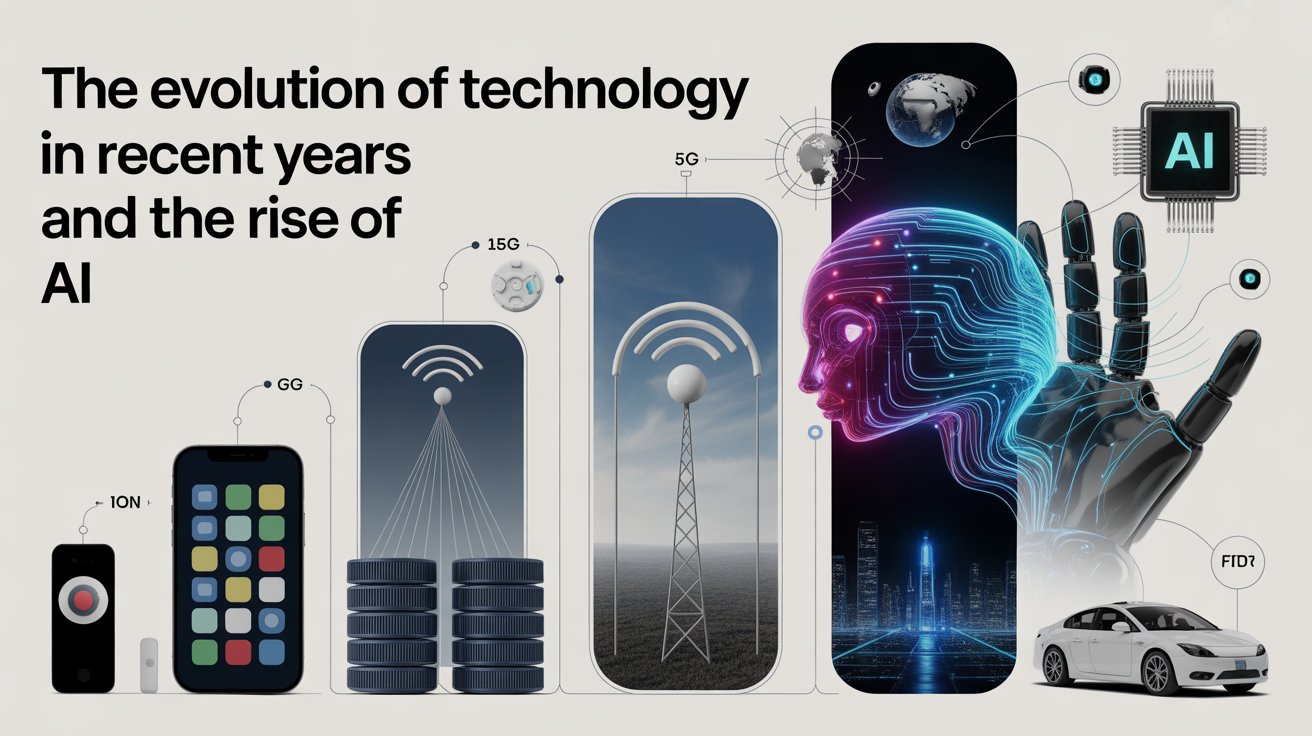
Over the past decade, the world of technology has experienced exponential growth. Instead of incremental improvements, we are witnessing a complete paradigm shift. Technologies that once seemed experimental have become critical business foundations, and the rise of artificial intelligence has redefined what software is capable of. For software development companies, this era represents both immense opportunity and significant responsibility: shaping systems that lead entire industries forward.
The Cloud Revolution – The Foundation of Modern Software
In the early 2010s, migration to the cloud marked a major transformation in how organizations run software. Platforms like AWS, Azure, and Google Cloud enabled:
- Limitless scalability
- Rapid deployment
- Automated scaling under load
- Built-in high-level security
Software development shifted toward Microservices, Containers, and distributed architectures that allowed building resilient and complex systems with unprecedented efficiency.
The Age of Mobile and IoT – A Connected World
Recent years brought a fully connected reality: smartphones, smart vehicles, IoT devices, smart homes, and enterprise automation systems. This shift required new approaches to software development:
- Real-time performance
- Strong security and authentication
- Seamless device-to-cloud integration
Developers now design systems that interact across ecosystems and generate massive amounts of data.
Big Data and Advanced Analytics
The explosion of data created the need for new ways to store, analyze, and derive business value from information.
Technologies such as Data Lakes, real-time streaming, and advanced BI tools have become essential.
Software development today requires deep understanding of data infrastructure—not just code.
The Rise of Artificial Intelligence – A New Business Reality
Modern AI has been the true game-changer. Generative models (like GPT), machine learning, NLP, computer vision, and autonomous agents are reshaping every industry.
AI is no longer optional; it is the foundation of every new software solution:
- Automating complex operational processes
- Enhancing user experiences with personalized intelligence
- Predictive analytics and risk assessment
- Autonomous creation of content, code, and business workflows
Software companies must now integrate AI as a core component—not an add-on.
The Future of Development – Human + AI Collaboration
The development world is entering a new era where developers work alongside intelligent tools. These tools help write code, detect bugs, optimize systems, and accelerate delivery cycles.
The result is a shift toward creative, strategic development while automation handles repetitive tasks.
Conclusion
The rapid technological evolution of the last decade has shaped a smarter, faster, more automated world. Leading software development companies are those that transform these advancements into real, high-value business solutions—enhanced user experiences, intelligent automation, and breakthrough innovation.
The AI era isn’t just a trend. It is the foundation of the next technological wave.